
Most of us have said it at least once — probably more times than we can count: “I’m fine.” We say it when we’re tired. We say it when our shoulders are crawling up toward our ears. We say it when we’ve had a headache for three days straight and chalked it up to the weather or not drinking enough water. But here’s the truth that Dr. Kevin Hartung and the team at Family Chiropractic Center in McKees Rocks, PA see every single week: stress doesn’t just live in your mind. It takes up residence in your body, often without you even realizing it. And ignoring it doesn’t make it go away — it makes it harder to find.
If you’ve been feeling off lately but can’t quite put your finger on why, this article is for you. We’re going to walk through exactly how stress hides in your muscles, your spine, and your nervous system — and what you can do about it.
What Is Physical Stress and Why Does It Matter?
So, what exactly does it mean for stress to “hide” in your body? Physical stress refers to the physiological changes your body undergoes in response to mental, emotional, or environmental pressure. When your brain perceives a threat — whether that’s a work deadline or a difficult conversation — it triggers your nervous system to activate a fight-or-flight response. Muscles tighten, breathing shallows, and your spine and surrounding tissues absorb that tension whether you want them to or not.
How Stress Hides in Your Body
Here’s something that surprises many of the patients who walk into Family Chiropractic Center in McKees Rocks: the body keeps score. That’s not just a popular phrase — it’s a well-documented physiological reality. When you experience stress repeatedly over days, weeks, or months, your body begins to adapt to that heightened state of tension. Your muscles, especially in the neck, upper back, and jaw, start holding chronic contraction as their new “normal.”
What makes this tricky is that your brain eventually stops flagging it as a problem. The tight neck, the clenched jaw, the hunched shoulders — they stop feeling tense because they’ve become your baseline. You genuinely don’t notice it anymore. This is what chiropractors mean when they say stress “hides.” It’s not that the stress disappears. It’s that you stop recognizing it as stress at all.
There are three primary ways stress embeds itself physically. First, there’s muscular tension — chronic tightness that alters your posture and movement patterns. Second, there’s postural compensation — your body begins to reorganize itself around areas of tension, creating imbalances that can strain joints and discs over time. Third, there’s nervous system dysregulation — a state where your body struggles to shift out of sympathetic (high-alert) mode and into parasympathetic (rest and recovery) mode.
Common Physical Symptoms of Chronic Stress
One of the most important conversations Dr. Kevin Hartung has with new patients involves connecting the dots between what they’re feeling physically and what’s been happening in their lives. People are often surprised to learn that many of their most persistent complaints have a strong stress component behind them.
Tension headaches are one of the most common. These are typically felt as a band of pressure around the head, often stemming from tightness in the suboccipital muscles at the base of the skull. People assume they need more water or less screen time — and while those things matter, the root driver is often unresolved muscular tension from chronic stress.
Neck and shoulder stiffness is another telltale sign. When we’re stressed, we unconsciously elevate and round our shoulders. Over time, the upper trapezius, levator scapulae, and surrounding muscles become chronically overloaded. This doesn’t just feel uncomfortable — it can restrict range of motion and even affect breathing patterns.
Low back pain is also deeply connected to stress. Research published in sources like the Spine Journal has explored the relationship between psychological stress and the perception and severity of back pain. While the biomechanical factors are real, the nervous system’s role in amplifying pain signals during periods of high stress is increasingly well understood.
Other physical signs of hidden stress include disrupted sleep, jaw tension or grinding, digestive discomfort, unexplained fatigue, and even changes in your gait or the way you hold yourself when you walk.
What Stress Does to Your Spine and Nervous System
Your spine isn’t just a stack of bones. It’s the primary conduit for your central nervous system. Every nerve that controls sensation, movement, and organ function passes through or near your spinal column. When chronic muscular tension pulls vertebrae out of their optimal alignment — what chiropractors call a subluxation — it can create interference in nerve communication throughout the body.
This is where the conversation gets really important. Your nervous system controls your stress response. If the spine is under chronic tension and creating irritation in the nervous system, it can actually make your stress response harder to regulate. You may find yourself more reactive, sleeping more poorly, or struggling to relax even when you finally do have downtime. It becomes a cycle: stress tightens the spine, a tight spine amplifies nervous system irritation, and an irritated nervous system makes stress feel more intense.
Dr. Kevin Hartung takes this connection seriously. At Family Chiropractic Center, the focus isn’t just on relieving a sore neck — it’s on restoring the underlying neurological balance that allows your body to manage stress more effectively on its own.
Your posture is also a visible indicator of your nervous system’s state. Rounded shoulders, a forward head position, and a collapsed lumbar curve aren’t just aesthetic concerns. They reflect how your body has organized itself around chronic tension and protective guarding. Correcting posture isn’t just cosmetic — it can directly influence how calm or activated your nervous system feels throughout the day.
How Chiropractic Care Fits In
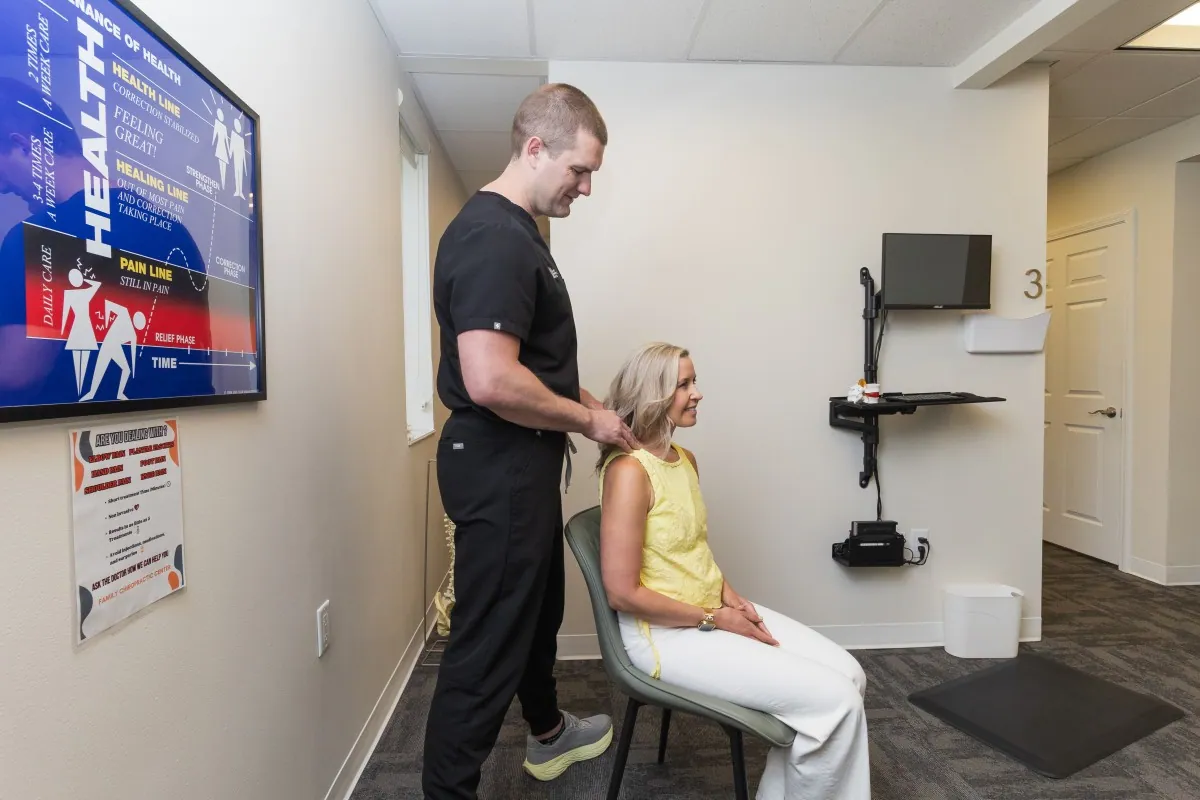
Chiropractic care offers a non-invasive, drug-free approach to addressing the physical effects of chronic stress. The goal of spinal adjustments is to restore proper alignment and motion to the vertebrae, reducing mechanical irritation to the surrounding nerves and soft tissues. When the nervous system is communicating more clearly and the spine is moving the way it’s designed to move, many patients report feeling not just physically better, but calmer and more resilient overall.
Evidence from bodies like the National Center for Complementary and Integrative Health (NCCIH) and the American Chiropractic Association suggests that chiropractic care can be a meaningful part of a conservative approach to managing musculoskeletal pain and tension — including pain that has a significant stress-related component.
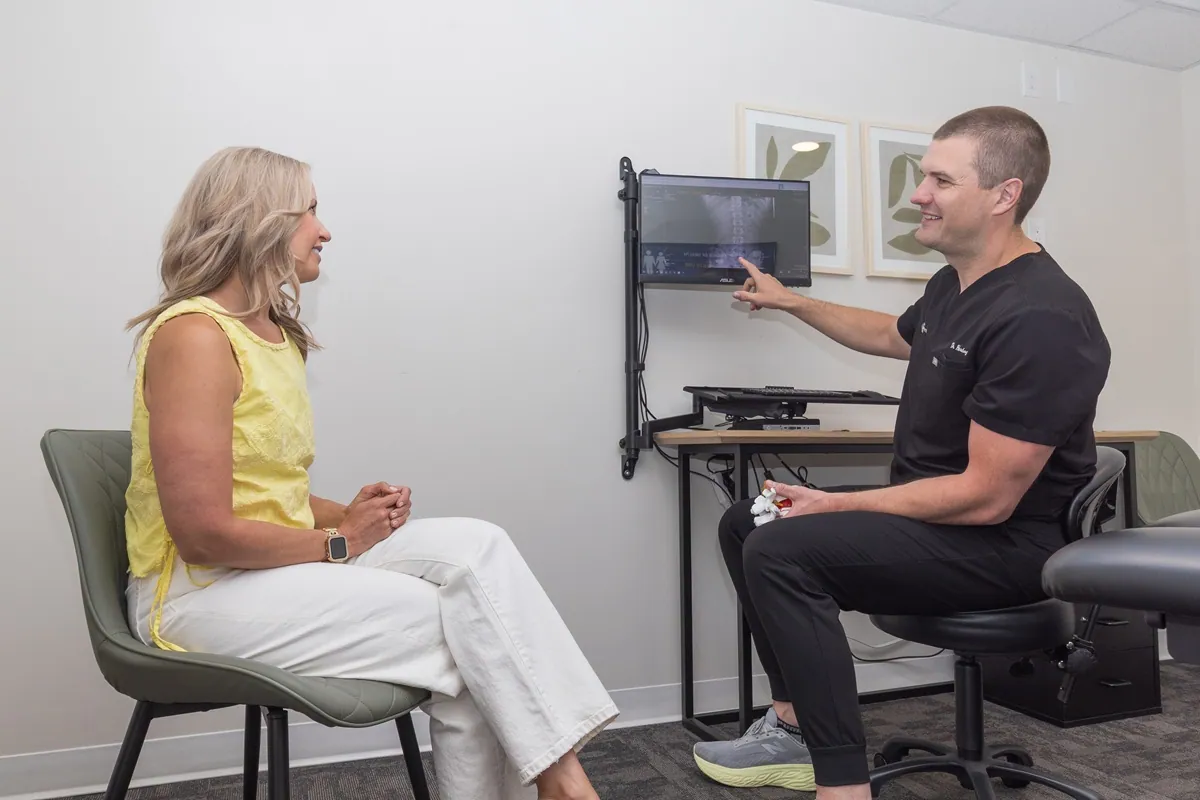
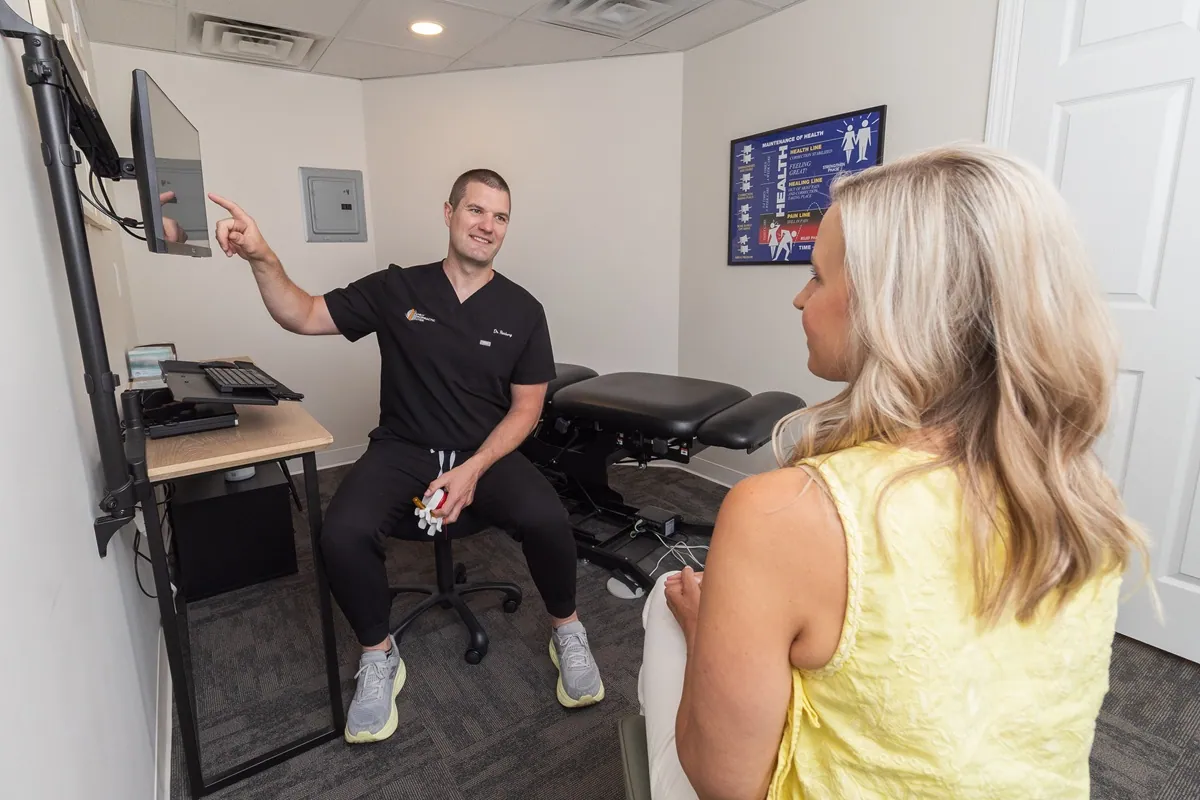
At Family Chiropractic Center in McKees Rocks, PA, care is individualized. Dr. Kevin Hartung takes time to understand not just where you’re hurting, but what’s going on in your life. Stress is always part of that conversation. A thorough assessment helps identify areas of restricted motion, postural imbalance, and nervous system tension that may be contributing to your symptoms. From there, a personalized care plan is developed that might include spinal adjustments, soft tissue work, and lifestyle guidance to support your body’s ability to recover and adapt.
This isn’t about masking pain or giving you a temporary fix. It’s about helping your body function the way it was designed to — with resilience, balance, and the capacity to handle life’s demands without falling apart.
Practical Tips to Help Your Body Release Stress
Between visits, there are meaningful things you can do to help your body manage and release the physical burden of stress. These aren’t magic cures, but they’re real, evidence-informed habits that support your nervous system and musculoskeletal health.
Diaphragmatic breathing is one of the most underrated tools you have. When you breathe deeply into your belly rather than shallowly into your chest, you activate the parasympathetic branch of your nervous system. This directly counters the fight-or-flight response. Even five minutes of intentional slow breathing can shift your body’s state meaningfully.
Movement matters enormously. Sitting still — whether at a desk or on a couch — allows tension to settle and accumulate. Short, regular walks, gentle neck rolls, and shoulder blade squeezes throughout the day can prevent tension from taking hold. You don’t need an elaborate workout routine. You need frequent, low-level movement woven into your day.
Sleep hygiene is also foundational. Your body does its deepest healing during sleep, including releasing accumulated muscular tension. Consistent bedtimes, limiting screen exposure before bed, and keeping your bedroom cool and dark are all simple steps with real physiological impact.
Finally, pay attention to your posture during moments of stress. Notice whether you raise your shoulders, clench your jaw, or hold your breath when you’re anxious. Simply bringing awareness to these habits is the first step toward changing them.
When to See a Chiropractor
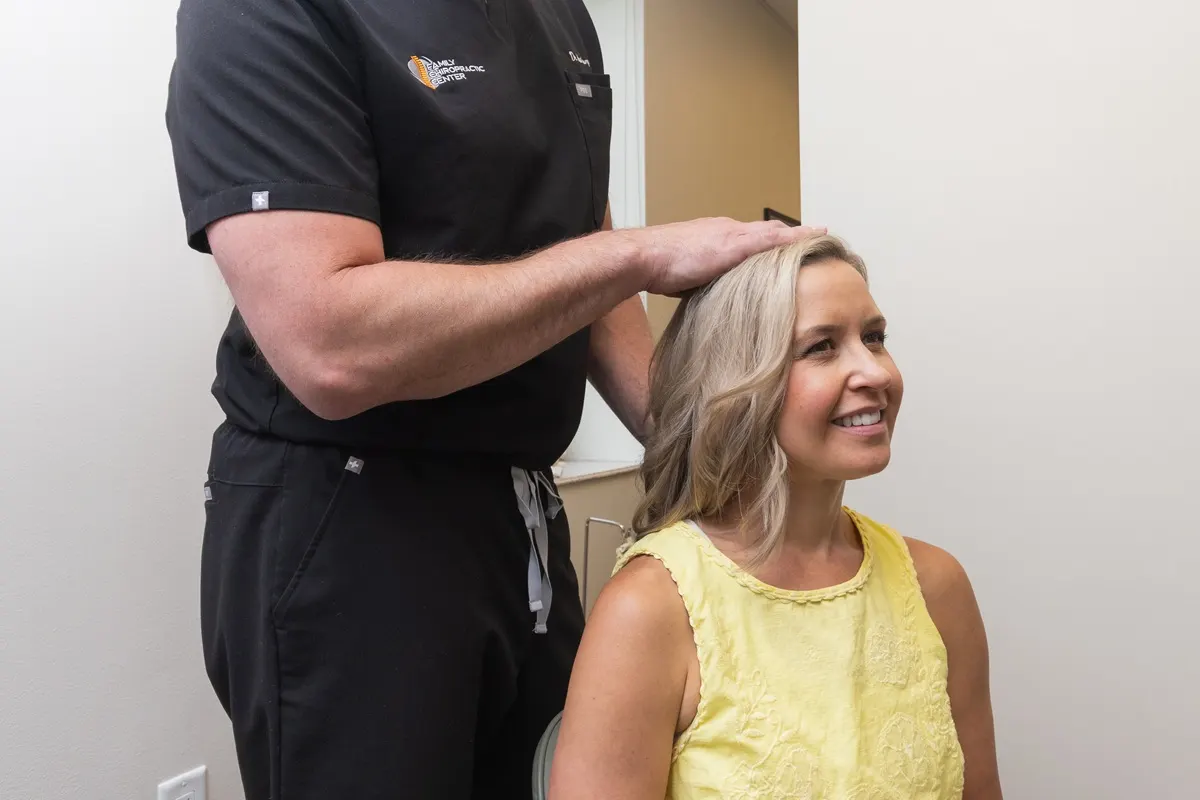
Knowing when to seek professional care is important. If you’ve had persistent neck or back pain lasting more than a few weeks, recurring tension headaches, or stiffness that limits your daily activity, those are reasonable reasons to schedule a consultation. You don’t need to be in severe pain to benefit from chiropractic care. In fact, earlier evaluation often leads to better outcomes and simpler care plans.
That said, there are red flags that warrant immediate medical attention rather than chiropractic care. These include sudden, severe pain following an injury or accident, pain accompanied by chest tightness or difficulty breathing, numbness or weakness in your limbs, or any loss of bladder or bowel control. These symptoms require emergency evaluation by a physician.
For the vast majority of stress-related physical complaints — chronic tension, stiffness, postural strain, and recurring headaches — chiropractic care is a safe, appropriate, and effective starting point. Dr. Kevin Hartung and the team at Family Chiropractic Center in McKees Rocks, PA are here to help you figure out where you stand and what steps make the most sense for your situation.
Stress Symptoms vs. Common Physical Triggers
|
Physical Symptom |
How Stress Contributes |
Common Mistake |
Better Approach |
|---|---|---|---|
|
Tension Headaches |
Suboccipital and upper trapezius muscle tightening from chronic stress |
Relying solely on pain relievers |
Address muscular and spinal tension at the source |
|
Neck & Shoulder Stiffness |
Unconscious shoulder elevation and forward head posture |
Ignoring it until pain becomes severe |
Regular movement breaks and chiropractic evaluation |
|
Low Back Pain |
Nervous system amplification of pain signals during stress |
Assuming it’s only a structural problem |
Combine spinal care with stress management strategies |
|
Jaw Tension / Grinding |
Fight-or-flight clenching, often during sleep |
Treating only the jaw without addressing overall tension |
Full-body tension assessment and care |
|
Sleep Disruption |
Elevated sympathetic nervous system activity prevents deep rest |
Relying on sleep aids long-term |
Nervous system regulation through movement, breathing, and spinal health |
Myths vs. Facts About Stress and Your Body
Myth: If I’m not in pain, stress isn’t affecting my body.
Fact: Stress causes measurable physiological changes — increased muscle tension, altered posture, and nervous system activation — long before pain develops. By the time pain appears, stress has often been building in the body for weeks or months.
Myth: Chiropractic care is only for back injuries.
Fact: Chiropractic care addresses the relationship between the spine and the nervous system, which governs your entire body’s stress response. Many patients seek care specifically for stress-related tension, headaches, and postural issues — not just acute injuries.
Myth: Stress-related pain is “all in your head” and not real.
Fact: Stress-related pain is entirely real and measurable. The nervous system’s role in amplifying pain signals is well-documented in pain science research. Dismissing this kind of pain doesn’t help anyone — understanding its origin does.
Myth: Once stress is gone, your body automatically returns to normal.
Fact: Chronic tension can alter muscle tone, posture, and movement patterns in ways that persist even after the stressful period ends. Without intentional recovery — whether through movement, manual care, or other strategies — these physical patterns can become fixed.
Myth: You have to be under extreme stress for it to affect you physically.
Fact: Low-grade, everyday stress — the kind most of us live with constantly — accumulates just as meaningfully as acute stress. The difference is that it’s less obvious, which is exactly why so many people don’t connect their physical symptoms to stress at all.
You Don’t Have to Keep Pushing Through It
Here in McKees Rocks, PA, the patients who come through the doors of Family Chiropractic Center often arrive thinking their pain is just something they have to live with. They’ve been telling themselves they’re fine for so long that it’s become their default setting. But “fine” isn’t the same as well. And your body has been trying to tell you that in the only language it knows — through tension, stiffness, headaches, and fatigue.
Dr. Kevin Hartung believes that understanding why your body feels the way it does is just as important as treating it. When you understand the connection between your nervous system, your stress response, and your physical health, you stop feeling confused by your own body and start feeling empowered to take care of it.
If any of what you’ve read here resonates — if you’ve been carrying tension you can’t shake, dealing with recurring pain, or just feeling like your body isn’t keeping up with your life — we’d love to be a resource for you. Family Chiropractic Center in McKees Rocks, PA is here to support the whole community with honest, personalized, compassionate care. You deserve to feel genuinely well. Not just fine.
Frequently Asked Questions
Can stress really cause physical pain?
Yes, absolutely. Stress triggers muscular tension, alters posture, and activates the nervous system in ways that create and amplify real physical pain. The connection between psychological stress and musculoskeletal pain is well-supported in pain science and chiropractic research.
How does a chiropractor help with stress?
Chiropractors address the physical manifestations of stress by restoring proper spinal alignment and motion, which reduces nervous system irritation. This can help your body shift out of fight-or-flight mode more easily and recover from the physical burden of chronic tension.
What are the most common signs that stress is hiding in my body?
Tension headaches, neck and shoulder stiffness, low back pain, jaw clenching, disrupted sleep, and unexplained fatigue are among the most common physical signs. Many people experience these symptoms for months before connecting them to stress.
Is chiropractic care safe for stress-related pain?
For most people, chiropractic care is a safe, non-invasive approach to addressing stress-related musculoskeletal tension. A thorough evaluation by a licensed chiropractor helps determine whether care is appropriate for your specific situation.
How long does it take to feel better with chiropractic care?
This varies depending on how long the tension or misalignment has been present and the individual’s overall health. Some patients notice improvement within a few visits, while others with longer-standing issues may need more time. Dr. Kevin Hartung will give you an honest assessment after your initial evaluation.
Do I need to be in severe pain to see a chiropractor?
Not at all. Many patients come to Family Chiropractic Center for preventive care or to address mild but persistent tension and stiffness. Earlier care often leads to faster recovery and less complex treatment needs.
TL;DR — Key Takeaways
-
Stress doesn’t just affect your mood — it physically changes your muscles, posture, and nervous system, often without you noticing.
-
Common physical signs of hidden stress include tension headaches, neck and shoulder stiffness, low back pain, jaw clenching, and poor sleep.
-
Chronic stress can pull the spine out of alignment and create nervous system irritation, making it harder for your body to regulate itself and recover.
-
Chiropractic care offers a non-invasive, drug-free approach to addressing the physical effects of stress by restoring spinal alignment and nervous system balance.
-
If you’ve been feeling off and can’t explain why, a consultation with Dr. Kevin Hartung at Family Chiropractic Center in McKees Rocks, PA is a great place to start.